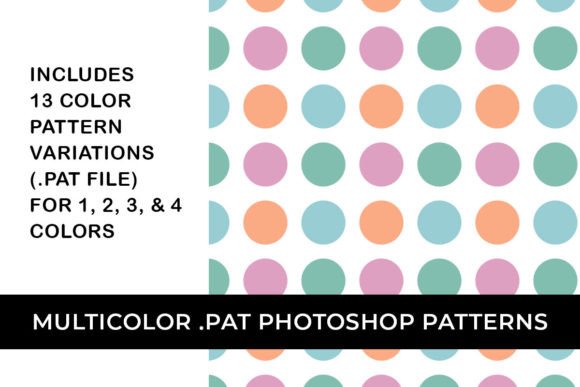
Multicolor Dot Photoshop Pattern
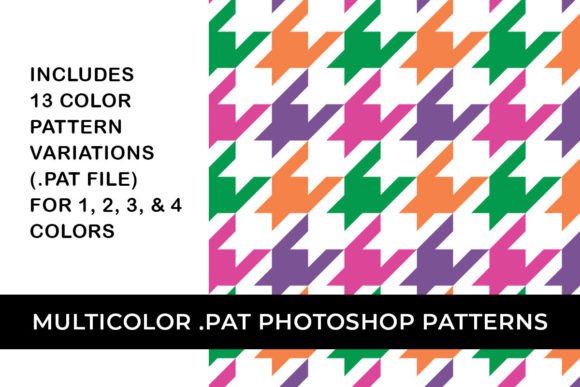
Designers today need speed, flexibility, and visual distinction—without sacrificing quality or creative control. The Multicolor Dot Photoshop Pattern delivers exactly that: a curated set of 13 versatile, ready-to-use dot-based patterns in a single .pat file for Adobe Photoshop. These aren’t monochrome repeats or generic halftones—they’re thoughtfully constructed multicolor arrangements with intentional rhythm, balance, and repeat logic. Each variation supports horizontal, diagonal, and vertical tiling across 1-, 2-, 3-, and 4-color configurations, giving you precise control over density, direction, and chromatic contrast.
Why Multicolor Dot Patterns Fit Modern Design Workflows
Contemporary digital design leans into intentionality—not just aesthetics, but efficiency. Clients and collaborators expect rapid iteration, brand-aligned customization, and asset reusability across platforms. A static JPEG background won’t cut it when you need to adjust hue saturation for dark mode, shift palette tones for seasonal campaigns, or adapt a pattern for print versus web resolution. That’s where the Multicolor Dot Photoshop Pattern shines: it’s built for non-destructive editing from the start. By applying the pattern as a fill layer and using a clipping mask with a color adjustment layer (like Hue/Saturation or Color Lookup), you retain full control over color without re-exporting or rebuilding anything. No rasterizing. No layer duplication. Just one clean, editable stack.
This workflow mirrors how professionals now approach asset libraries—less about “finished” elements, more about modular, responsive components. It aligns with broader shifts toward component-driven design systems, especially in branding, merchandising, and UI/UX prototyping. For example, a freelance surface pattern designer can use the diagonal 3-color variation as a base for textile mockups, then tweak saturation values to preview how the same motif reads on cotton versus ceramic. An educator building digital course materials can apply the vertical 2-color dot pattern as a subtle background for slide decks—then shift its tone to match accessibility contrast guidelines with two clicks.
How These Patterns Reflect Evolving Creative Expectations
Dot-based motifs have long held symbolic and functional weight—from Ben-Day dots in pop art to optical illusions in mid-century graphics—but today’s users expect more than nostalgia. They want patterns that feel contemporary, inclusive in palette, and technically robust. The 13 variations included in this .pat file respond to that expectation. There’s no arbitrary randomness: each arrangement considers visual weight distribution, spacing consistency, and color interaction. The horizontal 4-color version, for instance, uses staggered alignment to avoid visual fatigue; the diagonal 1-color variant maintains even optical density at any scale—critical for high-DPI outputs like packaging or apparel prints.
What’s changed isn’t the dot itself—it’s how we deploy it. Ten years ago, designers often sourced or built patterns per project. Now, they curate reusable, adaptable toolkits. This shift is driven by tighter deadlines, cross-platform delivery (social, email, print, AR previews), and growing demand for sustainable design practices—where reusing and recoloring beats recreating from scratch. The Multicolor Dot Photoshop Pattern fits seamlessly into that mindset. Its .pat format ensures instant compatibility with Photoshop versions CS6 through current releases, and its vector-adjacent scalability (when used with smart objects or high-res canvases) means it holds up whether you’re designing Instagram Stories or trade show banners.
Practical Applications Across Roles and Industries
The versatility of these patterns becomes clear when you map them to real-world tasks:
- Product designers use the vertical 2-color variation to create consistent, branded packaging backgrounds—then generate alternate SKUs by swapping hues via adjustment layers, keeping all spacing and alignment intact.
- Educators and course creators apply the horizontal 3-color pattern as a gentle, non-distracting backdrop for PDF worksheets or Notion templates—adjusting brightness to ensure readability across devices.
- Small business owners building Shopify stores insert the diagonal 4-color pattern into product mockups (e.g., phone cases, tote bags) and test multiple palettes before finalizing inventory, reducing guesswork and sample costs.
- Bloggers and content marketers layer the 1-color dot pattern beneath text callouts or quote graphics, using blending modes like Multiply or Overlay to add depth without obscuring legibility.
- Hobbyists and crafters export individual tiles as seamless digital paper for Cricut or Silhouette projects—scaling freely because the pattern repeat is mathematically precise, not hand-traced.
None of these uses require advanced scripting or third-party plugins. Everything works inside standard Photoshop—no extra downloads, subscriptions, or learning curves beyond basic layer masking and adjustment layer fundamentals.
Getting Started Without Overcomplicating Things
Installation takes seconds: open Photoshop, go to Edit > Presets > Preset Manager, select Patterns, click Load, and choose the provided .pat file. Once loaded, the patterns appear in the Pattern Picker (found in the Fill dialog, Layer Style > Pattern Overlay, or the Paint Bucket tool options). To recolor non-destructively:
- Create a new layer and fill it with any of the included patterns using Edit > Fill > Custom Pattern.
- Add a Hue/Saturation adjustment layer above it.
- Right-click the adjustment layer and choose Create Clipping Mask.
- Adjust sliders to shift hue, boost saturation, or lighten/darken—only the pattern layer responds.
This method preserves your original layer’s integrity. You can toggle the adjustment layer on/off, duplicate it for A/B testing, or save different versions as layer comps. It also integrates cleanly with batch actions—if you regularly apply patterns to product mockup templates, you can record the entire process once and replay it across dozens of files.
Design Integrity Meets Everyday Utility
What makes the Multicolor Dot Photoshop Pattern useful isn’t novelty—it’s reliability. In an era where AI tools generate endless variations but rarely offer precise, editable control, these patterns provide something increasingly rare: human-crafted structure with machine-ready flexibility. They don’t replace creativity—they accelerate it. You’re not locked into preset colors or fixed orientations. You’re given a foundation designed to support decisions, not dictate them.
That balance matters most when time is constrained and expectations are high—whether you’re prepping assets for a client pitch, updating social media templates between meetings, or prototyping a new line of stationery late on a Sunday evening. The patterns work because they were built with constraints in mind: consistent tile boundaries, predictable color behavior under adjustment layers, and repeat logic that avoids visible seams—even at extreme zoom levels.
They also reflect a quiet but meaningful trend in creative software usage: the return to thoughtful, lightweight tools that integrate deeply with existing habits instead of demanding wholesale workflow overhauls. No subscription tiers. No cloud dependencies. Just a .pat file, Photoshop, and the ability to make deliberate, beautiful choices—quickly.