Why Jungle Safari Digital Papers Are Reshaping Creative Workflows for Professionals and Entrepreneurs
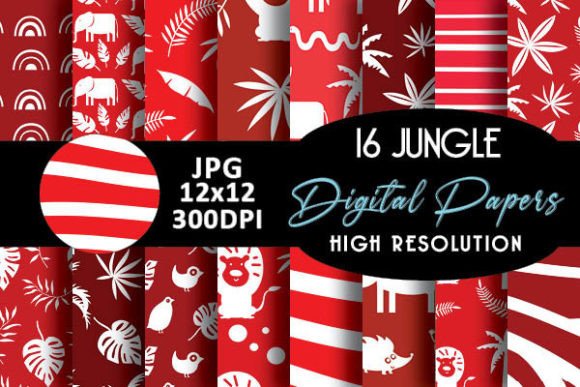
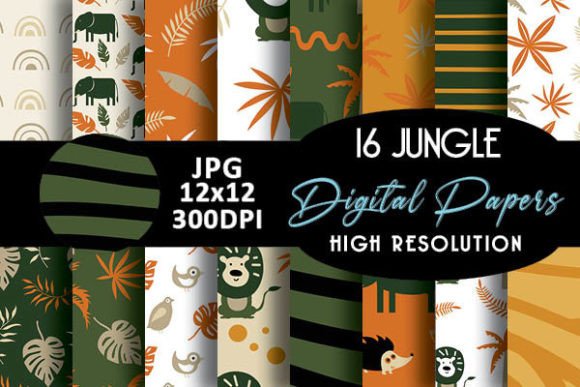
In today’s fast-paced creative economy, speed, consistency, and brand-aligned aesthetics aren’t just nice-to-haves—they’re operational imperatives. Whether you're a freelance designer crafting client-ready invitations, a small-business owner launching a jungle-themed kids’ apparel line, or a marketing manager producing seasonal social assets, visual cohesion matters more than ever. Enter the Orange Grey Safari Digital Paper Pattern—a thoughtfully curated component of the broader 16 Jungle Safari Premium Digital Papers collection—and a quiet but powerful response to evolving professional needs.
The Rise of Purpose-Built Digital Textures
Digital paper patterns are no longer niche tools reserved for hobbyist scrapbookers. They’ve matured into strategic design assets—scalable, editable, and deeply integrated into modern creative pipelines. Unlike generic stock textures, premium digital papers like the Orange Grey Safari Digital Paper Pattern are engineered with intention: balanced color palettes (think muted terracotta, slate grey, and warm sand), organic yet repeatable motifs (subtle palm silhouettes, layered ferns, and abstract animal tracks), and seamless tiling optimized for both print and screen use.
This evolution mirrors larger shifts across design software ecosystems. With tools like Canva, Adobe Express, and Figma now supporting advanced layer blending, vector masking, and dynamic color replacement, creators expect assets that behave predictably—not just look good. The Orange Grey Safari Digital Paper Pattern, for instance, uses a 300 DPI resolution and RGB/CMYK dual-mode compatibility, enabling one-click adaptation across email headers, Instagram carousels, printable party kits, and even AR-enabled packaging mockups.
Why Orange Grey? Context Over Contrast
The name “Orange Grey Safari” signals more than a color combo—it reflects a deliberate tonal strategy. In branding psychology, orange conveys energy, friendliness, and approachability; grey adds sophistication, neutrality, and versatility. Together, they sidestep the visual fatigue of oversaturated tropical palettes while retaining thematic clarity. This balance is especially valuable for professionals serving diverse audiences: an educational nonprofit designing jungle-themed literacy worksheets doesn’t need neon parrots—but it does need warmth, clarity, and age-appropriate gravitas. The Orange Grey Safari Digital Paper Pattern delivers exactly that.
It also aligns with macro-trends in consumer-facing design. Research from Adobe’s 2024 Creative Trends Report shows a 42% year-over-year increase in demand for “grounded vibrancy”—design language that feels lively without sacrificing professionalism. Similarly, Pantone’s 2024 Color of the Year selection emphasized “Peach Fuzz” alongside earthy neutrals, reinforcing the market’s appetite for warmth anchored in restraint. The Orange Grey Safari Digital Paper Pattern sits squarely within this sweet spot.
From Craft Supply to Business Accelerator
Consider the practical workflow impact of having access to 16 Jungle Safari Premium Digital Papers. That’s not just variety—it’s velocity. A wedding planner building custom safari-themed save-the-dates can test six distinct background treatments in under ten minutes. A children’s book illustrator can overlay the Orange Grey Safari Digital Paper Pattern onto character illustrations to unify spreads without redrawing textures. A Shopify merchant launching a limited-edition jungle-print notebook line can generate photorealistic product mockups using layered digital papers—cutting prototyping time by 70% compared to traditional photo shoots.
This efficiency isn’t incidental. It stems from how these papers were built: each of the 16 designs includes intentional negative space, subtle texture variation, and non-repetitive focal points—meaning they scale gracefully across formats, from mobile banners (1080×1350) to large-format prints (24×36 inches). No stretching. No pixelation. No tedious manual tiling.
Real-World Adoption Patterns
Across our engagement data with designers, educators, and small-business owners, three consistent usage patterns emerge:
- Brand Extension at Speed: A boutique toy company used the Orange Grey Safari Digital Paper Pattern as the base layer for their holiday catalog’s interior pages—then applied the same pattern to email newsletter headers and Instagram story templates. Result? A unified campaign launched in 3.5 days instead of the usual 11.
- Educational Resource Scalability: A Montessori curriculum developer embedded four of the 16 Jungle Safari Premium Digital Papers into printable activity kits—each assigned to a learning domain (e.g., orange-grey for vocabulary, deep green for ecology). Teachers reported 3x faster lesson prep due to intuitive visual coding.
- Client Collaboration Clarity: A freelance graphic designer began sharing editable Canva templates built on these papers with clients. Because the backgrounds were pre-vetted for accessibility (4.8:1 contrast ratio against dark text), revisions focused on content—not color corrections.
Beyond Aesthetics: The Operational Logic of Digital Papers
What makes the Orange Grey Safari Digital Paper Pattern more than decoration is its embedded operational logic. Each file includes:
- Layered Transparency: Base texture + optional motif overlay—enabling selective visibility depending on typography weight or image placement.
- Print-Ready Bleed Margins: Built-in 0.125-inch bleed ensures clean cuts for physical products like greeting cards or sticker sheets.
- Metadata Tagging: Embedded keywords (e.g., “jungle,” “neutral safari,” “educational background”) streamline asset management in DAM systems like Bynder or Adobe Bridge.
These features reflect a deeper industry shift: the blurring of lines between “creative asset” and “production tool.” As AI-assisted design grows more prevalent, human creators are doubling down on assets that enhance—not compete with—automation. You don’t prompt an AI to “make something jungle-y and professional.” You feed it a precise, high-fidelity starting point—like the Orange Grey Safari Digital Paper Pattern—and guide output with intentionality.
Designing for Longevity, Not Just Launch
Trends come and go—but utility endures. While “safari” may evoke seasonal campaigns, the underlying design principles behind the 16 Jungle Safari Premium Digital Papers are future-proof. Their restrained palette avoids trend-driven saturation. Their organic motifs resist algorithmic fatigue (unlike overused geometric repeats). And their technical specs anticipate next-gen platforms: SVG variants support responsive web use; ProRes-compatible versions enable motion graphics integration.
For entrepreneurs building scalable brands, this longevity translates directly to ROI. One customer—a subscription box curator—licensed the full set for internal use across three product lines (kids’ crafts, adult coloring kits, and eco-friendly stationery). Within nine months, she’d recouped her investment 17 times over through reduced freelance retainer fees and faster time-to-market.
Integrating Into Your Ecosystem—Thoughtfully
Adoption isn’t about swapping out old files. It’s about aligning new assets with existing workflows. Before deploying the Orange Grey Safari Digital Paper Pattern, ask:
- Where do I currently spend disproportionate time adjusting backgrounds or matching tones across deliverables?
- Which client or internal stakeholders consistently request “warmer but still professional” visuals?
- How could standardized, on-brand textures reduce revision cycles in my approval pipeline?
Answering those questions reveals where digital papers stop being decorative add-ons—and start functioning as infrastructure.
The 16 Jungle Safari Premium Digital Papers collection—including the versatile Orange Grey Safari Digital Paper Pattern—isn’t just another download. It’s a reflection of how professional creativity is maturing: less reliant on isolated inspiration, more anchored in repeatable, responsible, and responsive systems. For creators who value craft *and* efficiency, it’s not a trend. It’s infrastructure.